
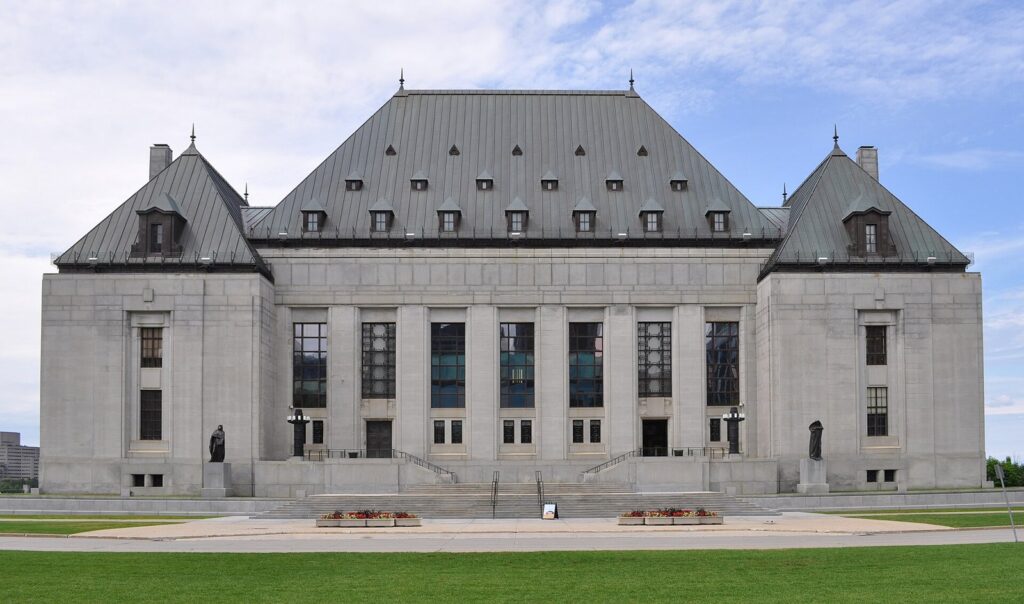
Bill 21 ruling: Canada’s Supreme Court upholds Quebec secularism law
Canada’s top court has largely upheld Quebec’s secularism law in a landmark Bill 21 ruling delivered on Friday. The Supreme Court of Canada confirmed that the province can bar many public-sector workers, including teachers and police officers, from wearing religious symbols on the job, while striking down one provision that applied to elected members of the provincial legislature.
The judgment dismissed all of the appeals before the court. It follows a seven-year legal battle and is widely seen as one of the most consequential Charter of Rights and Freedoms decisions in the country’s history.
What the Bill 21 ruling decided
At the core of the decision is the notwithstanding clause, Section 33 of the Charter, which lets legislatures override certain rights, such as freedom of religion and equality, for renewable five-year periods. Quebec invoked the clause pre-emptively when it passed the law in 2019 and renewed it in 2024.
The court found that this pre-emptive use of the clause is valid in law. As a result, the ban on religious symbols, which covers items such as hijabs, turbans, kippahs, crucifixes and kirpans for certain employees, remains in force. Writing for the court, Chief Justice Richard Wagner said the law is rooted in Quebec’s legitimate and historical commitment to the secularism of the state, according to CBC News and The Globe and Mail.
However, the judges carved out one exception. Section 8 of the law, which requires members of the National Assembly to keep their faces uncovered, was declared of no force or effect. The court said it would stop people whose religious beliefs require a face covering from sitting in the legislature, which breaches the democratic rights guaranteed by Section 3 of the Charter.
The court also rejected the argument that the law violates the education rights of Quebec’s English-speaking minority. Although it accepted that the law could affect the hiring and promotion of some school staff, it found no proof that this undermined the community’s linguistic or cultural interests.
A divided court on the notwithstanding clause
Behind the overall result, the seven judges who heard the case were deeply split. According to The Globe and Mail, they wrote four separate sets of reasons running to roughly 140,000 words. The National Post reported that the majority found no substantive limits on how legislatures may use the notwithstanding clause, a key point for provinces such as Alberta, Ontario and Saskatchewan, which defended a broad power to use it.
At the same time, the decision broke new ground. By a 4-3 margin, the judges endorsed the idea that courts may issue non-binding declarations stating which Charter rights a law violates, even when the notwithstanding clause keeps that law in effect. Nevertheless, the court chose not to issue such a declaration about Bill 21 itself, again by a 4-3 count, the Globe reported.
This was only the second major ruling by the Supreme Court on the clause, after the 1988 Ford case on French-language commercial signs, which gave governments wide freedom to use it.
Why the Quebec secularism case matters
Bill 21, formally the Act respecting the laicity of the State, became law in June 2019. Its challengers, who include Muslim, Sikh and Catholic teachers as well as civil liberties groups, argue that it falls hardest on religious minorities, particularly Muslim women who wear the hijab. The Quebec government, by contrast, presents it as an expression of the province’s long-standing choice to keep the state neutral on religion.
Lower courts in Quebec upheld the law in 2021 and 2024, both times because of the notwithstanding clause. The Supreme Court then heard six appeals over four days in March, one of the longest hearings in its history, with a record number of intervening groups.
Ahead of the ruling, Quebec Premier Paul St-Pierre Plamondon described the case as being about preserving the democratic choices of Quebec. Meanwhile, the province has continued to widen its secularism rules, including a 2025 law extending the symbols ban to everyone who works with students in schools and a further law adopted this year covering subsidised daycare workers.
The decision is likely to shape how far provinces across Canada can go in overriding Charter rights in the years ahead.
Sources
- CBC News – Supreme Court of Canada rules Quebec’s secularism law is constitutionally valid
- CBC News – Supreme Court of Canada upholds Quebec’s controversial secularism law, with 1 exception
- The Globe and Mail – Bill 21 live updates: Supreme Court upholds Quebec secularism law in landmark ruling
- National Post – Divided SCC rules no new limits on notwithstanding clause, upholds much of Bill 21
- CTV News – Supreme Court of Canada upholds Quebec’s secularism law